

SOCIAL MEDIA
As is often the case, it is difficult to evaluate properly the big events and latest trends in our lives because we find ourselves in the middle of the history being written. Social media certainly qualifies. Its global reach and nearly universal appeal has reduced most geographic borders to mere imaginary lines on a map. It has provided billions of individuals with a forum to share their lives,

Getting Past ‘We’ve Always Done It This Way’
(By Pat Bryson) I was on a market visit with one of my stations a few weeks ago. We were discussing how to sell a sports team whose games we carry. Traditional sponsorship offered the choice of day games or night games. Take your pick or buy both. There are many more night games than day games. Which one would you buy?

TV: The Best Seat for Live Sports
Many rabid sports fans revel in the opportunity to support their favorite teams by wearing their gear to games, fueling their enthusiasm with tailgate parties and cheering wildly from the stands. Attending many sporting events is either prohibited or limited, however. Sports fans are relegated to the safety of their homes and their big-screen TVs – and a much more comfortable seat than any in a stadium or arena.

Let’s Call It a Retention Review
We have all heard about the Great Resignation. The notion that many people are leaving their job or not returning to work has been a persistent theme of 2021 and 2022. There are any number of theories as to the cause of this trend: Pay scales were too low. Government benefits were too high creating a disincentive to work. People were fearful of getting sick and/or bringing the virus home to members of their family.

The Next Generation is Watching You Lead. Here’s What They’re Learning
A recent discussion with a group of late millennial professionals led to some important insights about what the next generation wants to learn from their current leaders and what workplace experience they’re seeking. The group was remarkable in that they were all born in 1996, the last year of the millennial generation and have had life experiences that span major hallmarks of their generation and those of Gen Z.

AI for Local Media Sales: A Practical Guide to Boosting Efficiency and Building Sales
Follow Sarah, a fictional seasoned local media sales rep, as she explores how AI can help her work smarter and sell more effectively. Through tools like Mailchimp, HubSpot, and Drift, she automates routine tasks, prioritizes high-value leads, and personalizes her outreach. AI also helps her optimize ad performance, manage social media, and generate compelling proposals—freeing up time for strategic selling. Sarah’s journey illustrates how any sales rep can start small with AI, build confidence, and gain a competitive edge in today’s fast-paced media landscape.
.png)
Trust as a Media Strategy: How Local Publishers Can Win the Safety Moment
Malicious online ads have become a leading route for malware, and the risk is rising fastest inside programmatic buying—where complex supply chains make accountability hard and bad actors easy to hide. For local media reps and agencies, the issue is immediate: when something goes wrong, clients don’t blame “adtech,” they blame the people who planned, placed, and approved the spend. The opportunity is to win renewals and trust by selling “safe reach”—and by leaning into the local publisher advantage: controlled environments, fewer intermediaries, and faster accountability.
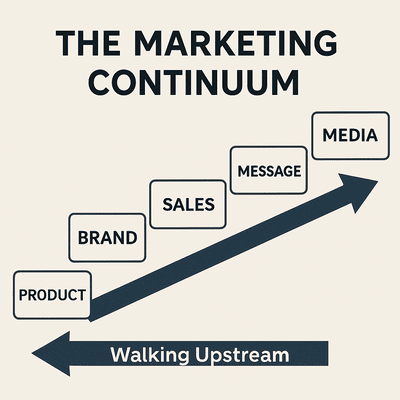
Understand The Client Continuum
Most media sellers show up to renewal meetings eager to talk schedules and impressions, while their clients are preoccupied with upstream issues like market share, competition, and sales performance. This article introduces the “Marketing Continuum” — Product, Brand, Sales, Message, Media — to explain why advertisers live upstream while radio and other media live at the far end. Because of this gap, many renewal conversations are misaligned, with sellers pushing media solutions while clients are still wrestling with deeper business questions. Sellers who deliberately “walk upstream” by asking thoughtful questions about the client’s current challenges shift the dialogue from “Do you need a Q1 schedule?” to “What are you trying to achieve right now?”. Over time, this upstream posture transforms them from vendors into trusted thought partners, earning earlier visibility into plans and larger, more strategic opportunities.

Toy Industry Faces Holiday Hope and 2025 Growth Prospects Amid Softening Sales
Nov 13, 2024 | Media, Retail, Advertising and the Economy, Industry Press Highlights Executive Summary: In 2024, Mattel and Hasbro, the industry giants in the toy market, lowered...
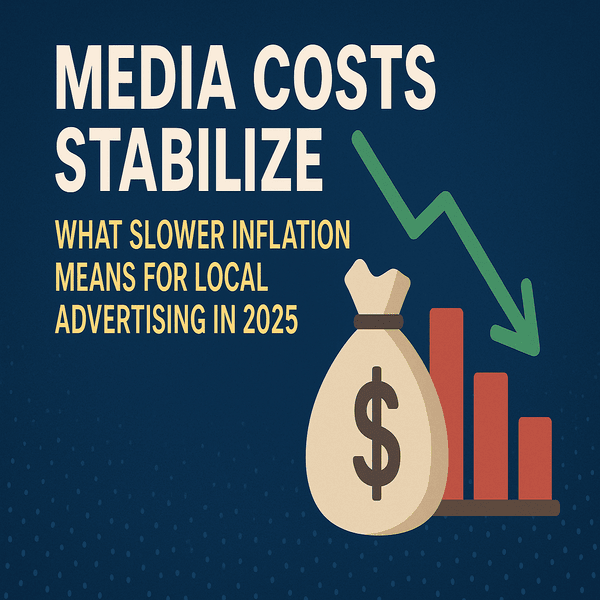
Media Costs Stabilize - What Slower Inflation Means for Local Advertising in 2025
As media inflation cools across the U.S., local media sellers mdash;across newspapers, magazines, billboards, TV, and digital mdash;are entering 2025 with a more stable pricing environment. The latest ECI Media Inflation Report projects just a 2.5% increase in media costs, with radio ad rates rising only 1% and digital video (CTV) seeing continued price declines. For local media sellers, this presents a key opportunity: while national and global uncertainties persist, local advertisers may find more room to buy and plan confidently. Stability in pricing can help unlock conversations with cautious advertisers, especially in sectors pressured by tariffs and consumer belt-tightening.

Mastering Chess Strategy and Sales Conversations: How Openings Win in Both Games
In the seventh grade, I learned to play chess. When I got to high school, I came across a book called Bobby Fischer Teaches Chess, and decided to study it. It was unusual. It gave you a chess puzzle to solve. To see how you did, you had to turn the book upside down to read Fischer’s notes and recommended strategy. I played all summer and got better and better, beating my freshman peers easily. The seniors, however, were able to beat any and all freshmen.
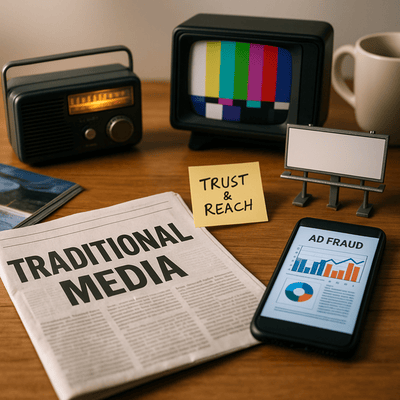
The Enduring Power of Traditional Media in a Digital World
Traditional media—radio, TV, newspapers, magazines, cable, and outdoor—continues to play a vital role in building brand awareness and trust, even as digital platforms dominate the advertising landscape. Despite the rise of programmatic and targeted digital ads, traditional channels offer unmatched transparency, broad reach, and credibility. Growing concerns over digital ad fraud, which costs advertisers billions annually through tactics like click fraud and domain spoofing, are prompting marketers to rebalance their media strategies. Leading brands are integrating traditional and digital media to create full-funnel campaigns that combine mass exposure with precision targeting. As younger audiences rediscover analog experiences, traditional media is proving its resilience and relevance in a hybrid advertising future.

Elevating Sales Skills Through Engaging Training Games and Activities
In the world of sales, the ability to effectively communicate, negotiate, and understand products is imperative. While traditional training methods often involve presentations and role-playing, integrating games and activities into sales training can be a game-changer. These interactive approaches not only enhance engagement but also foster skill development in a more immersive and enjoyable manner.

Here Comes the Boom!
Every human wants a return to some form of normalcy, but it will be a “new normal.” Many reports and analyses indicate the second quarter of 2021 is when the “new normal” will start to take hold and then accelerate during the second half of 2021 and into 2022. Many economists in the private and public sectors are forecasting a booming economy, both globally and for the US. Some predict the boom of 2021+ will rival the boom years of the mid-1980s.

Tips for Practicing One-On-One Listening to Improve Internal Comms
Companies are recognizing listening’s impact on retention, productivity, and culture by installing macro-organizational listening strategies. Strategies include designating a chief listening officer, hiring listening consulting firms and employing organization-wide listening mechanisms like engagement surveys; pulse-taking during exit, onboarding, and post-merger interviews; crowdsourcing methods like suggestion boxes or polling on specific topics.