

Holiday Shopping Surge Signals Banner Season for Local Advertisers
A record 186.9 million Americans plan to shop from Thanksgiving through Cyber Monday, creating unprecedented opportunities for local media sales and advertising agencies as retailers compete during the industry's most critical period. While Black Friday remains dominant with 130.4 million expected shoppers, Saturday's local business focus and 59% of shoppers using digital wallets demand multi-platform strategies spanning the entire weekend. With 58% of consumers already shopping by early November and total spending forecast to exceed $1 trillion, advertisers must launch campaigns earlier with value-driven messaging across search, mobile, and geo-targeted channels.
Reaching Generation Z: How Local Media Can Ride the Tik Tok Wave
Gen Z is reshaping how news is consumed, with 40% getting most of their information from TikTok or X. Influencers like Kelsey Russell, known as The Print Princess, are turning print stories into personality-driven videos that resonate with younger audiences. This trend reflects a deeper need for cohesive narratives in a fragmented media landscape and offers local media sales teams a unique opportunity: integrate TikTok strategies to connect advertisers with Gen Z. Practical steps include turning newsroom talent into creators, partnering with influencers for behind-the-scenes content, and bundling TikTok with traditional media to deliver authenticity and measurable ROI. The Media Audit provides the data to target fast-growing categories and position radio as a relevant solution in this evolving market.

The New American ATM: Inside the HELOC Surge—and How Local Media Can Cash In
Home equity lines of credit (HELOCs) are surging again in 2025–2026 as homeowners sitting on record equity and ultra-low first-mortgage rates look for smarter ways to fund renovations and consolidate high-interest debt. HELOCs growth is a great opportunity for local media. Unlike the pre-2008 era, today’s growth is driven by more disciplined, prime borrowers and stricter underwriting, making HELOCs a strategic tool rather than a reckless ATM. Banks, credit unions, and fintechs are all racing to capture this demand, but local media are uniquely positioned to help them win by combining trusted storytelling with data-driven targeting of equity-rich homeowners. For local media sellers and agencies, this creates a timely opportunity to build HELOC campaigns around real-life use cases—“don’t move, improve,” credit-card cleanup, and life events—while pairing brand messaging with performance channels. Ultimately, the HELOC revival reveals a middle class trying to regain control in an anxious economy, using their homes not to splurge, but to stabilize their financial lives.
The Thanksgiving Weekend Paradox: Why It Still Matters—and How Local Media Can Win
Thanksgiving weekend remains a cultural and commercial powerhouse, with 88% of U.S. adults planning to spend $127 billion despite economic uncertainty. Millennials and Gen Z lead the charge, driving omnichannel shopping behaviors that blend online convenience with in-store experiences. Consumers are highly motivated by deals, with nearly three-quarters using the weekend to stock up on essentials and 63% leveraging AI tools to find the best offers. For local media sellers and ad agencies, this is a prime opportunity to position radio as the holiday companion—trusted, local, and omnipresent—while bundling it with digital extensions for maximum reach. The big takeaway: Thanksgiving weekend isn’t just about transactions; it’s about rituals, meaning, and community—making local media the perfect bridge between brands and consumers.
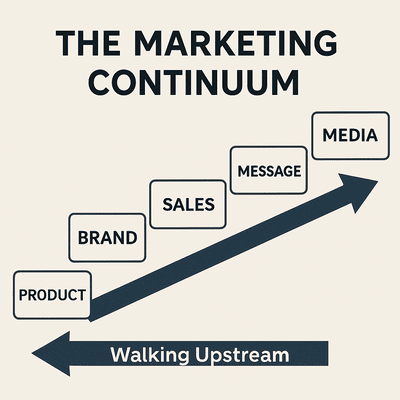
Understand The Client Continuum
Most media sellers show up to renewal meetings eager to talk schedules and impressions, while their clients are preoccupied with upstream issues like market share, competition, and sales performance. This article introduces the “Marketing Continuum” — Product, Brand, Sales, Message, Media — to explain why advertisers live upstream while radio and other media live at the far end. Because of this gap, many renewal conversations are misaligned, with sellers pushing media solutions while clients are still wrestling with deeper business questions. Sellers who deliberately “walk upstream” by asking thoughtful questions about the client’s current challenges shift the dialogue from “Do you need a Q1 schedule?” to “What are you trying to achieve right now?”. Over time, this upstream posture transforms them from vendors into trusted thought partners, earning earlier visibility into plans and larger, more strategic opportunities.

In-Store Shopping: Critical Channel for Holiday Sales Season
Physical retail maintains strong pull despite e-commerce growth, offering local media and agencies key targeting opportunities.
Despite e-commerce growth, 76% of consumers consider in-store shopping a holiday ritual, with three-quarters saying it's essential to feeling festive and connected. Physical stores drive higher-value purchases, as 70% of shoppers feel more comfortable buying premium items in-store versus 30% online, while 72% trust in-store quality more than online options. The research challenges Black Friday's effectiveness, with 84% of consumers preferring deals spread throughout November and December rather than concentrated one-day events. For local media sales reps and agencies, the data suggests opportunities in sustained promotional campaigns, experiential retail messaging, and targeting Gen Z shoppers who show the strongest affinity for in-store discovery.
Consumers Plan Near-Record Holiday Spend; Local Media & Agencies Should Adjust Strategy
Consumers plan to spend an average of $890.49 this holiday season—the second-highest level in 23 years—despite concerns about tariffs and rising prices. About $628 will go toward gifts, showing budgets remain strong even as shoppers grow more value-conscious. While 42% begin browsing before November, 63% plan to buy mainly over Thanksgiving weekend, with 60% finishing in December. Online leads all channels (55%), followed by grocery, department, and discount stores, underscoring the need for integrated digital and local strategies. For local media and agencies, success will hinge on value-driven, well-timed, and locally relevant campaigns that blend digital precision with community connection.

2026: A Look Into The Future and What It Means for Your Local Media and Marketing
The 2025 Marketing Brew Summit revealed that agility is now the defining skill in marketing, with 87% of marketers calling it essential as the industry rapidly evolves toward 2026. Marketers are shifting focus from AI upskilling to experimenting with new channels—especially social, influencer, and emerging platforms—while simultaneously prioritizing better attribution and outcome-based measurement. Despite this ambition, most teams remain under-resourced and structurally slow, forcing marketers to “do more with less” and improvise speed within rigid systems. For local media sales teams and agencies, the insights signal opportunity: agile local campaigns, modular testing packages, and measurable ROI can outperform national one-size-fits-all models. The future of local marketing success will depend on turning experimentation into strategy, measurement into proof, and community engagement into long-term brand value.
What Local Media, Ad Agencies, and Advertisers Can Learn from National Campaigns
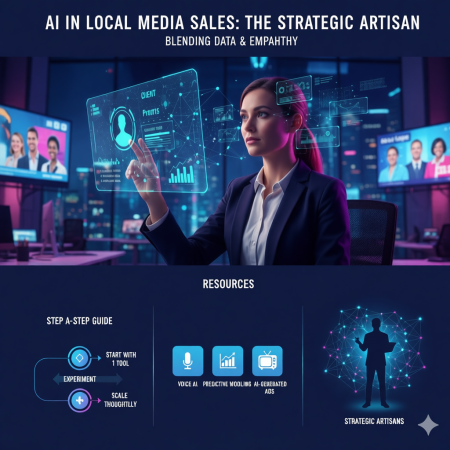
National advertising campaigns offer valuable lessons for local media, ad agencies, and advertisers—especially in the areas of consistency, emotional storytelling, and omnichannel strategy. By studying how major brands build Top-of-Mind Awareness (TOMA), use data to target audiences, and measure results, local marketers can apply similar principles at a smaller scale. Emotional resonance, community influencers, and purpose-driven messaging are just as powerful locally as they are nationally. Tools like co-op advertising, AI-driven creative, and cross-platform media planning can help local businesses compete more effectively. Ultimately, the key takeaway is this: think like a national brand, but act with local insight and agility.

The Gift: Turning Holiday Shopper Stress Into Local Media Sales Opportunity
Holiday shopping stress is surging, with 84% of consumers abandoning carts due to feeling overwhelmed, according to Accenture’s 2025 Holiday Shopping Survey. Younger shoppers are especially prone, with 89% of Gen Z and 91% of millennials reporting they walk away from purchases. The survey also found 82% of consumers feel overwhelmed by advertising and 77% cite too many options, up sharply from prior years. While this poses a risk to retailers, it also presents an opportunity for local merchants to stand out by simplifying choices, highlighting human expertise, and creating stress-free shopping experiences. For local media sales reps and agencies, the key is positioning clients as solution providers, using advertising that cuts through the noise with clarity, trust, and confidence.

CPMs Stabilize as Holiday Season Nears: A Signal for Local Sellers
Digital ad spending is showing signs of recovery, with display retargeting and prospecting CPMs rebounding significantly in Q3, according to AdRoll. AI-driven traffic to retail sites has surged over 4,700% year-over-year, signaling a major shift in how consumers discover products. Marketers are being urged to invest earlier—September and October—to build brand recognition ahead of the holiday season. For local media sales teams and agencies, this presents an opportunity to pitch awareness-focused campaigns across connected TV, radio, and digital. The takeaway: early, visibility-driven advertising strategies could secure more revenue as advertiser confidence returns.

The Steadily Rising Power of U.S. Latinos: What Local Media and Ad Agencies Need to Know
The U.S. Latino economy now produces roughly $3.6 trillion in annual GDP, making it one of the world’s largest and fastest-growing markets. Within that growth, Latinas (Hispanic women) contribute about $1.3 trillion in economic output and drive most household purchasing decisions. Younger cohorts— Gen Z and Gen Alpha—are highly bilingual, racially mixed, and expect brands to demonstrate authenticity and cultural relevance. Hispanic households show wide diversity in country of origin, language use, and multigenerational structure, demanding more nuanced marketing than one-size-fits-all campaigns. For local media sales teams and ad agencies, tailoring content and ad packages to these demographic, cultural, and technological shifts is critical to capturing a rapidly expanding share of consumer spending.

Local Media’s Moment: Blending Data and Magic to Win Retail Ad Dollars
Retailers are under pressure to combine data-driven efficiency
with the emotional “magic” of storytelling to win today’s fickle consumers. Local media reps and advertising agencies can capitalize by packaging omnichannel campaigns
that integrate predictive analytics, local market data, and authentic creative.
By offering measurable results—such as foot-traffic lift, in-store sales, and online conversions—media sellers move from simple vendors to
strategic partners.
Authentic, community-based storytelling and experiential activations help local brands differentiate and avoid the “race to the bottom” on price. Those who embrace this data + magic model
can capture larger budgets, strengthen client relationships, and increase their own revenue in a rapidly evolving retail landscape.
Holiday Sales 2025: Retailers Told to "Go Big" as Consumers Weigh Value and Experience
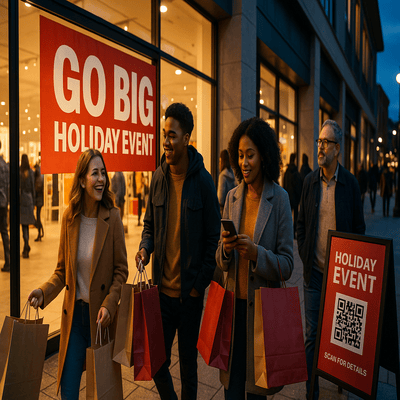
Holiday sales in 2025 are projected to rise 4% to more than $975 billion, a healthy but below-average pace as consumers balance rising wages with debt and economic uncertainty.
Bain Company advises retailers to “go big” with bold, event-driven promotions—especially around Black Friday and Cyber Monday—as cautious shoppers still flock to high-impact sales moments.
In-store spending is expected to gain 2.75% while e-commerce growth slows to 7%, making an integrated digital-plus-brick strategy essential.
Retailers that highlight value, deliver warm in-person experiences, and use timely, personalized ads are most likely to outperform.
For local media reps and ad agencies, the forecast is a call to action to pitch concentrated campaigns, bundle traditional with digital, and help clients turn calculated consumers into confident buyers.

The Psychology of Weather: Unlocking Local Advertising Power
Research from The Weather Company and Neuro-Insight shows that weather directly influences consumer memory, emotions, and purchase intent. They identified three “weather mindsets”—Creating (sunny), Relishing (cloudy), and Enduring (stormy)—each of which changes how people engage with advertising. Campaigns aligned with these mindsets can lift purchase intent by 10% or more, with detail memory strongly linked to buying behavior. Local media outlets and agencies can leverage these insights by timing creative, pricing inventory, and crafting messages that match real-time conditions. By integrating weather data into planning and measurement, sellers can differentiate their offerings and drive stronger results for local advertisers.